
Take Max, a two-year-old wirehaired Dachshund who barked at every passerby and ignored recall. We’ve seen it before—strong will, short legs, big personality. Training him isn’t about dominance, but consistency, structure, and the right tools. We start with five-minute sessions, treats the size of peas, and a quiet corner of the living room. The real challenge comes when distractions hit, and that’s where most give up. We don’t.
Key Takeaways
- Begin training early with short, consistent sessions to build obedience using positive reinforcement.
- Socialize your dachshund between 8–16 weeks to develop confidence and reduce reactivity.
- Use high-value treats and a clicker to reinforce basic commands like sit, stay, and come.
- Designate a potty area and use crate training to establish reliable housetraining habits.
- Teach a “quiet” command and reward silence to manage excessive barking effectively.
Understanding the Dachshund Temperament

While their small size might suggest otherwise, dachshunds carry themselves with surprising confidence, and our experiences have shown that their bold, clever nature demands a thoughtful approach to training.
As independent thinkers, each Dachshund has a unique temperament—some bold, others anxious—so we tailor our methods to fit their personality. We understand their clever minds respond best to positive reinforcement, especially treats and praise, which build trust and cooperation.
Their strong prey drive, rooted in their hunting past, means distractions like squirrels or smells can hijack focus fast. That’s why early socialization is non-negotiable: exposing them to people, sounds, and environments between 8–16 weeks old sets the foundation. During this critical period, providing appropriate chew toys can help redirect their natural urges and support healthy development.
We start training early, using short, consistent sessions—5 to 10 minutes, 2–3 times daily—to match their attention span. We avoid force; it backfires with such strong-willed dogs. Instead, we reward good choices immediately, reinforcing desired behaviors.
Debunking Common Dachshund Training Myths
We’ve seen it time and again—dachshunds labeled as too stubborn to train, written off before they even get a fair chance. But we understand better. Their so-called stubbornness is often a misunderstood expression of a smart, independent dachshund temperament.
With the right training approach—consistent positive reinforcement—they thrive, especially during early puppy training. Forget the myth that they don’t need socialization; they do. Early, positive exposure prevents anxiety and shapes confident adults.
And while they’re prone to back health issues, regular exercise—short, frequent walks and play—supports both physical and mental wellness. That bark? It’s not endless noise. Excessive barking stems from alertness, not defiance. Teaching them to distinguish real threats from daily sounds reduces unwanted noise.
No, not all dachshunds are the same—personalities vary, so tailor your methods. A one-size-fits-all mindset fails. We meet them where they are: observant, loyal, keen to connect.
When you combine understanding with patience, your dachshund doesn’t just learn—they shine. Extended walks using tools like a 20-foot leash can provide the freedom and exploration opportunities that support better training outcomes through increased engagement.
Essential Training Tools and Environment Setup
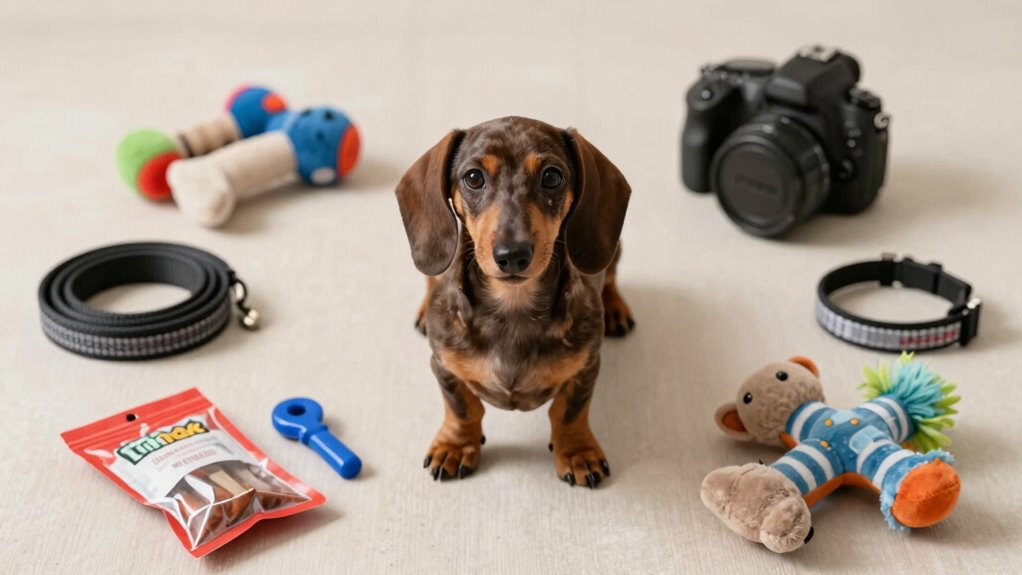
One well-prepared space and a few key tools make all the difference when training your dachshund. We set ours up with care, and you should too.
First, choose a quiet, distraction-free area—like a spare room or corner of the living space—where your puppy can focus. This consistency sharpens learning during early training sessions.
We use a 30″ x 24″ crate for crate training; it’s snug but comfortable, turning into a safe den they come to love. Pair that with a designated potty area outdoors—just a few steps from the door, clearly marked—so housetraining clicks faster.
For training your dachshund, we rely on positive reinforcement: high-value treats like freeze-dried liver bits, a clicker, and small toys they can’t resist. During meals, consider using a slow feeder bowl to encourage mindful eating habits and improve digestion while reinforcing calm feeding behavior.
A sturdy leash—½-inch-wide nylon with a secure snap—is non-negotiable, especially when redirecting their hunting instincts. These tools, combined with patience, build trust.
We’ve seen it work, and you’ll too.
Mastering Basic Commands With Positive Reinforcement
Always start with short, focused sessions—around five minutes—to match your dachshund’s attention span and keep them enthusiastic to learn. We use positive reinforcement because it builds trust and makes training enjoyable for both of us. When our dog responds to a command, we immediately reward with high-value treats or a favorite toy—this strengthens learning fast. Consistency is key: we always use the same commands and cues so our puppies aren’t confused. We begin with basics like “Sit,” “Stay,” and “Down,” then gradually add new ones. We watch our dachshund’s body language closely—if they seem stressed or distracted, we pause and reset. This keeps the experience positive and effective. Using anti-inflammatory treats as rewards can also support your dachshund’s joint health during extended training sessions.
| Command | Reward Used | Duration (per session) |
|---|---|---|
| Sit | Small treat | 5 minutes |
| Stay | Praise + toy | 5 minutes |
| Down | Chew strip | 5 minutes |
We train daily, hold their attention with energy and warmth, and celebrate every small win together.
Managing Excessive Barking and Reactivity

While their compact size and big personalities make dachshunds wonderfully affectionate companions, their instinct to bark at every doorbell, passing car, or shadow demands careful management.
It’s understood that unchecked barking turns into excessive barking, disrupting your home and straining nerves. To train a dachshund effectively, we must teach them when to bark—and when to stop. Reactivity, rooted in their hunting past, often flares around strangers or other dogs, making early socialization non-negotiable.
Start by exposing your pup to varied sounds, people, and places before 16 weeks. Use a firm “quiet” command the moment barking starts, then reward silence with treats and praise—positive reinforcement solidifies learning.
Never ignore barking; instead, redirect and reward calm behavior. Consistency is essential: every family member must respond the same way, every time. For additional support during training, consider tools like calming collars that can help reduce anxiety-driven barking in high-stress situations.
Expect setbacks—we call them “dachshund tantrums”—but stay patient. With daily practice and clear cues, we reduce reactivity and build a quieter, more confident dog.
Together, we create peace, one “quiet” at a time.
Preventing and Redirecting Destructive Digging Behavior
Most dachshunds dig—it’s wired into their DNA from centuries of burrowing after prey underground. We can’t erase that instinct, but we *can* focus on preventing and redirecting destructive digging behavior.
Consistent supervision is key: catch them early, especially during peak digging times like mid-morning or late afternoon. When we see our dachshund start to dig in forbidden areas, we calmly interrupt and redirect them to a designated digging zone—a 4’x4’ sand-filled box or a specific yard quadrant fenced off just for digging.
Training works best when we reinforce positive choices: reward them with treats or praise when they use their digging spot. We also reduce temptation by keeping the rest of the yard clear of toy-filled soil and offering chew toys or puzzle feeders that mimic digging satisfaction.
Redirecting doesn’t stop instinct—it honors it safely. With daily training, clear boundaries, and loving supervision, we shape behavior that protects our yards and nurtures our bond.
Socialization Strategies for Confidence and Calm

Building good digging habits sets a strong foundation, and now we focus on shaping how our dachshund engages with the world around them.
Early socialization is essential—we start between 6 and 16 weeks, when their brains are most receptive. We prioritize safe exposure to different people, sounds, surfaces, and environments to build lasting confidence. Positive reinforcement during new experiences helps our dachshund associate novelty with good feelings.
We introduce them to calm, well-behaved dogs and friendly people to guarantee every interaction supports trust. Puppy Kindergarten, starting around 9 weeks post-vaccination, gives them a structured environment to learn through play and guided exposure.
We take short car rides, visit quiet sidewalks, and explore varied textures—grass, gravel, tile—so they grow into a well-adjusted companion. Consistency matters: we repeat positive experiences weekly, using treats and praise to reward calm behavior.
These deliberate efforts shape a resilient, confident dachshund who handles life’s stimuli with ease. With patience and attention, our pup learns the world isn’t just safe—it’s full of good things.
Building Reliable Obedience in Real-World Situations
When distractions rise and the world moves fast, our dachshund still needs to listen as if we’re the only two in the room. We train for real-life obedience by using short sessions—just 5 minutes—so their focus stays sharp and engagement high.
We rely on positive reinforcement, always pairing commands with praise and high-value rewards like tiny bits of chicken or their favorite toy. Socialization laid the foundation, but now we practice in diverse settings: quiet sidewalks, busy parks, even outdoor cafés. This builds reliable obedience, no matter the environment.
We start with known cues—“sit,” “stay,” “come”—then reinforce them amid increasing distractions. Consistency is key. We go back to basics when needed, keeping our tone calm, our timing precise.
Our dachshund learns to look to us, not the squirrel. With patience, repetition, and love, we turn training into trust. We don’t rush. We celebrate small wins.
And we remember: every moment outside is a chance to deepen our bond and strengthen their response, one joyful “yes” at a time.
Frequently Asked Questions
What Are the 5 D’s of Dog Training?
We call them the 5 D’s: Distance, Distraction, Duration, Degree of Difficulty, and Dog. We use these training techniques with positive reinforcement, leash training, and mental stimulation to build obedience commands, socialization skills, behavioral cues, and exercise routines that deepen our bond.
What Not to Do With a Dachshund?
What if we told you avoiding harsh methods breaks trust? We never skip socialization importance or consistency in commands. We ditch dachshund training mistakes—instead, we use positive reinforcement techniques, patience during training, and fix common behavioral issues by creating a safe environment.
How Do You Discipline a Dachshund?
We discipline our dachshund with love and clear boundaries, using positive reinforcement and reward systems. Consistency is key—we practice leash training, crate training, socialization techniques, barking control, and gentle behavior correction to build trust and connection every single day.
How to Stop a Dachshund From Peeing in the House?
We stop our dachshund from peeing inside by using house training with schedule consistency and frequent breaks. We watch for outdoor signals, use positive reinforcement, try crate training, and swap puppy pads for behavior observation—it’s how we bond while teaching them where to go.
Conclusion
We’ve shown you how consistent, positive training shapes a well-behaved Dachshund. Short 5-10 minute sessions, treats, and a clicker build trust fast. You now know their stubborn streak isn’t a flaw—it’s a spark, like a small engine with big horsepower. Stick to routines, use clear commands, and socialize early. Together, you’ll turn challenges into calm, confident strides—every day, on every walk, at home and beyond.