
Dachshunds average 4 to 6 puppies per litter, but first-time moms often deliver just 2 to 3. Miniature dachshunds typically have 1 to 3, with larger litters posing health risks. Factors like age, weight, and overall health play key roles. We’ll walk you through what shapes litter size, when complications arise, and how to support both mom and pups—so you know exactly what to expect and how to prepare.
Key Takeaways
- Dachshunds typically have 4 to 6 puppies per litter, with larger litters in standard varieties.
- First-time mothers usually give birth to smaller litters of 2 to 3 puppies.
- Miniature dachshunds average 1 to 3 puppies, with larger litters being rare and riskier.
- A female dachshund’s age, health, and prior birthing experience influence litter size.
- Proper nutrition and veterinary care can support healthier, more robust litters.
Average Litter Size for Dachshunds

On average, dachshund litters include 4 to 6 puppies, though the exact number can vary based on several key factors. We understand how exciting it’s to anticipate a new litter, and understanding the average litter size helps set realistic expectations.
First litter sizes are often smaller—usually just 2 to 3 pups—even in standard-sized dachshunds. You’ll typically see larger litters in experienced mothers, especially those in ideal health.
Factors influencing litter size include the dam’s age, genetics, and overall well-being. While miniature dachshunds tend to have fewer puppies, averaging 1 to 3 per birth, standard dachshunds may deliver slightly higher numbers. Proper nutrition and pre-breeding care can significantly enhance reproductive success and support healthy litter development.
We always recommend tracking reproductive history and consulting with a trusted vet. Genetics play a powerful role, but so does proper nutrition and pre-breeding care.
It’s not just about size—it’s about creating the healthiest environment for mom and pups. Trust us, preparation makes all the difference. Recognizing these patterns helps you plan, support, and love every puppy exactly as they deserve.
Litter Sizes in Miniature Dachshunds
We’ve covered what to expect with dachshund litters overall, and now we’re zooming in on the smaller end of the spectrum—Miniature Dachshunds.
When it comes to litter sizes, mini Dachshunds usually have 1 to 3 puppies per litter, though some may have up to 5. Their tiny frames simply can’t support large litters, making bigger births rare and riskier. Larger litters increase health risks for both mom and pups—think complications during birth or low birth weights.
First-time moms often have even fewer puppies, with litter sizes on the lower end. Because of their size, these small dogs need extra attention. Proper care is non-negotiable: regular vet visits, a balanced diet, and a calm environment are all key.
We monitor closely during pregnancy, knowing that every pound and every day counts. While their litters are smaller, the love they give isn’t. With the right support, mini Dachshunds can have safe deliveries and healthy puppies—because small size doesn’t mean small miracles.
Key Factors That Influence Litter Size
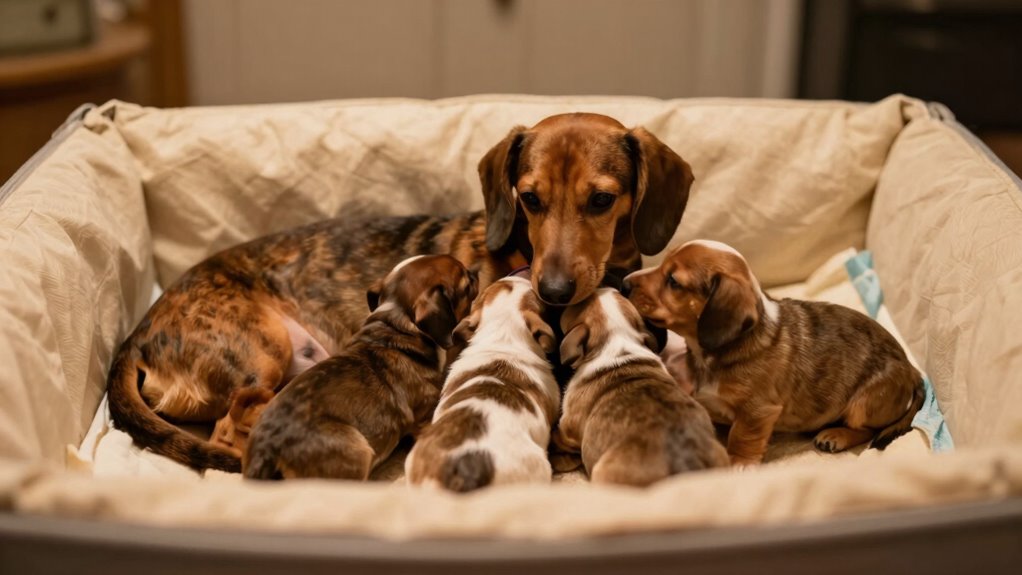
While genetics lay the foundation, we see litter size in Dachshunds shaped by a clear set of factors we can track and manage.
A Dachshund’s size matters—miniatures average 1–3 puppies, while standards typically have 4–6.
We also know age plays a role: healthier dachshunds between 3–4 years tend to produce the largest litters. After that, litter size often declines.
First-time mothers usually deliver smaller litters—just 2 to 3 puppies—regardless of type. With experience, their bodies respond better, often leading to bigger litters later on.
Environmental factors heavily influence outcomes. Stress, nutrition, and overall health of the mother all matter. A calm, stable home, high-quality diet, and routine vet care support both mother and puppies.
We’ve seen well-cared-for Dachshunds thrive, their litters healthier and more robust.
It’s not just chance—it’s care. When we nurture the mother, we shape the litter size. Every detail counts.
Health Risks During Pregnancy and Delivery
Pregnancy in Dachshunds brings unique health challenges we must prepare for—even as we’ve optimized litter size through age, type, and care. We can’t ignore the real health risks, from IVDD flare-ups to dystocia, which affects nearly 6.5% of Dachshund deliveries. Larger litter size increases strain, raising the chance of complications—13.3% of bitches need a C-section. First-time moms face added vulnerability, making consistent prenatal care non-negotiable. We monitor for labor signs closely, because early intervention saves lives. Proper harness selection during recovery walks helps support the mother’s spinal health while maintaining reflective visibility and safety during outdoor movement.
| Risk Factor | What It Means for Us |
|---|---|
| IVDD history | Higher spinal stress during pregnancy |
| Large litter size | Greater physical strain, higher C-section chance |
| First-time mother | Smaller litters, but more monitoring needed |
| Dystocia signs | Need immediate veterinary assistance |
| Poor prenatal care | Increased risk for mother and puppies |
We prioritize vet checkups, track weight, and stay ready for veterinary assistance. With care, we protect both mother and litter.
How Pregnancy Duration Affects Litter Outcomes

Since dachshund pregnancies typically last around 63 days—ranging from 58 to 68 days—the timing of birth plays a key role in litter outcomes.
We see the full picture when we link pregnancy duration with other key factors. For instance, pregnancy duration doesn’t directly determine litter size, but staying within that 58–68 day window gives each puppy the best shot.
We’ve learned that healthy dachshund moms, especially those in peak condition, often produce larger litters. Yet, even with perfect timing, first-time mothers usually have just 2 to 3 puppies in their first litter of puppies ever. It’s a pattern we’ve seen time and again.
Age, health, and genetics all weigh in when determining litter size. Proper prenatal care throughout the pregnancy duration improves survival and health. Just as gentle grooming during pregnancy can help expectant mothers feel more comfortable, proper prenatal care supports both the dam and developing puppies.
We watch for subtle changes—nesting, restlessness, temperature drops—because those signs help us predict labor and support healthier outcomes. While we can’t rush nature, we *can* prepare.
And that preparation makes all the difference for both mom and pups.
Caring for a Pregnant Dachshund
We give our pregnant dachshund the best chance at a healthy litter by stepping up care from day one.
We schedule monthly, then biweekly, vet visits to track her 63-day pregnancy and puppy development. We feed her a nutrient-rich diet, high in protein and calcium, to support her growing litter and future puppy milk production.
We keep her moving with short, gentle walks—15 minutes twice a day—to maintain muscle tone without strain.
As her due date nears, we set up a quiet, warm whelping box, 36 inches by 24 inches, lined with soft, washable bedding.
It’s understood that dachshund owners must stay alert; larger litters can bring dystocia—difficulty during labor. Signs like prolonged contractions or lethargy mean we call the vet fast.
We monitor her temperature drop—a full degree signals labor’s start. We stay calm, close, and ready to assist if she struggles to give birth.
Our steady care now protects her strength and the puppies’ first moments. Every step we take builds a safer arrival.
Post-Birth Care for Mother and Puppies
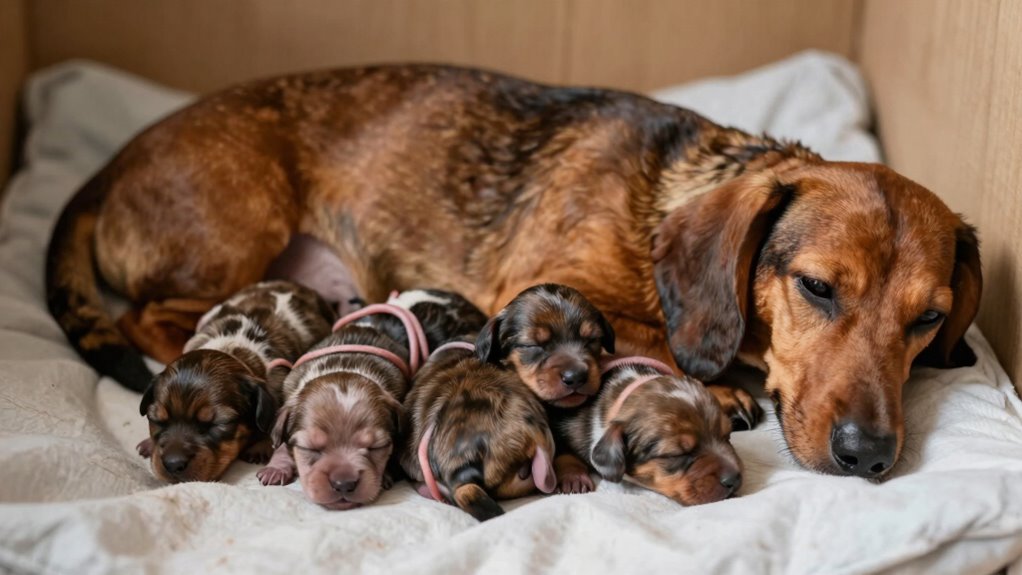
Right after the last puppy arrives, we shift focus to recovery and bonding—both for the mother and her newborns.
Post-birth care is critical during these first fragile days. We keep the whelping area warm (85–90°F) and draft-free so puppies can nestle close, gaining strength.
We watch the mother closely, checking for signs of health complications like excessive bleeding or lethargy. Nursing should start within the first two hours—vital for puppy immunity and growth.
If she struggles to feed them all, we supplement with powdered puppy milk every two hours. She needs constant access to fresh water and a nutrient-rich diet to fuel healing and milk production.
We schedule veterinary check-ups within 48 to 72 hours to confirm everyone’s on track.
- Monitor mother for health complications and nursing success
- Maintain a warm, draft-free whelping area (85–90°F)
- Feed mother a nutrient-rich diet and guarantee she stays hydrated
- Schedule early veterinary check-ups for mother and puppies
Frequently Asked Questions
How Many Puppies Do Mini Dachshunds Have in Their First Litter?
we usually have 1 to 3 puppies in our first litter, shaped by mini dachshund characteristics. we prioritize first litter care, puppy health tips, breeding considerations, and gentle dachshund temperament traits to nurture each precious pup safely and with deep love.
How Long Is a Dachshund Pregnant For?
We understand your heart races wondering—how long is a dachshund pregnant for? We’ll tell you: the dachshund gestation period lasts about 63 days. We watch for signs of dachshund pregnancy, honor dachshund breeding health, and nurture each moment while caring for pregnant dachshunds tenderly, just as you would.
What Is the Average Litter Size for a Dachshund?
we usually have 4 to 6 puppies per litter, though dachshund breeding can vary. we prioritize puppy health, litter care, and early socialization, knowing breed characteristics affect outcomes. each pup’s start matters deeply to us.
How Many Puppies Can a Dachshund Carry?
We’ve seen a Dachshund carry up to 12 puppies, though it’s rare. We prioritize puppy health, prenatal nutrition, and litter care. We start puppy socialization early and approach Dachshund breeding with love, care, and deep attention to each little life we nurture together.
Conclusion
We’ve covered what shapes dachshund litter sizes, and here’s something striking: while standard dachshunds average 4–6 puppies, miniature lines produce just 1–3, with litters over 5 being rare and risky. We monitor for dystocia, especially in first-time moms under 2 years old. Proper nutrition, timely vet checks, and tracking weight gain—around 30–50% during pregnancy—keep mom and pups safer. We stay prepared, stay informed, and give them the care they need.