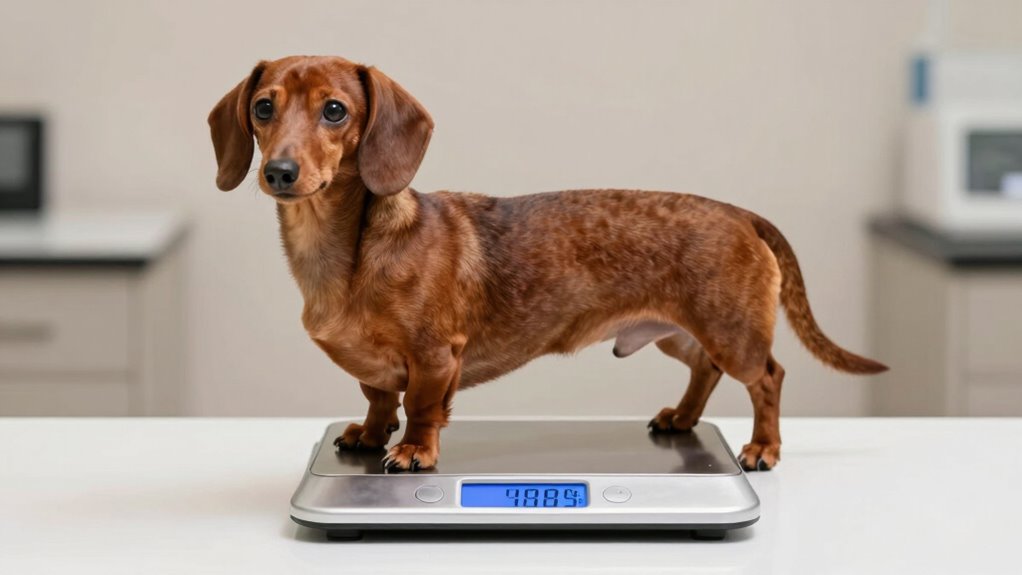
We keep a close eye on our mini dachshunds’ weight because it’s a key part of their health. Most adults weigh 8 to 11 pounds, with anything over 11 considered too heavy. By 8 to 10 months, they’ve usually reached their full size. A 4-month-old typically weighs 6–8 lbs, while at 6 months, they’re closer to 8–10. Staying within this range helps prevent back issues and joint stress. We track their growth closely—you’ll want to know what comes next.
Key Takeaways
- Miniature Dachshunds typically weigh less than 11 pounds when fully grown.
- Healthy adult Mini Dachshunds usually fall within the 8 to 11-pound range.
- They reach their full size and weight by around 12 months of age.
- At 4 months old, Mini Dachshunds generally weigh between 6 and 8 pounds.
- Maintaining a healthy weight helps prevent spinal and joint issues common in the breed.
How Big Do Miniature Dachshunds Get?
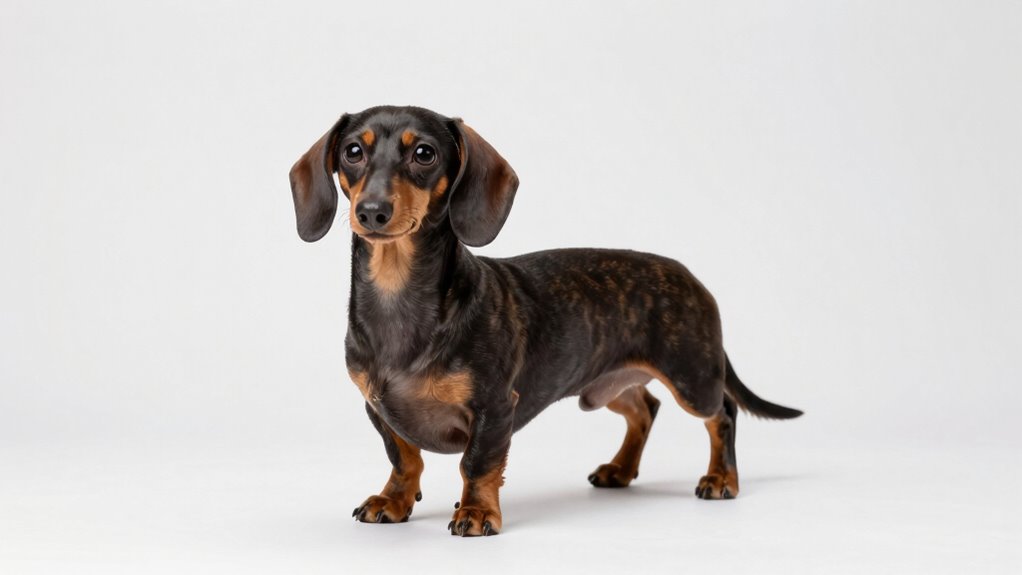
Most miniature Dachshunds weigh less than 11 pounds when fully grown, with a typical height of 5 to 6 inches at the shoulder. As owners of this charming breed, it’s understood that you want your adult Miniature Dachshund to thrive—not just survive.
A healthy weight usually lands between 8 to 11 pounds, though some may reach around 7 kg depending on genetics and lifestyle. This compact size is key to the breed’s charm and mobility. By 12 months, your Dachshund is fully grown, having reached both their final height and weight.
We recommend tracking these measurements, not just for looks, but for long-term health. A balanced diet, regular exercise, and routine vet visits help maintain a healthy weight and support spinal and joint health—critical for this long-backed breed. Due to their low stature and long bellies, miniature Dachshunds are particularly prone to getting soaked during outdoor activities, so waterproof raincoats can help protect their health during wet weather walks.
You’ll find that staying proactive keeps your Miniature Dachshund agile and energetic. We’ve seen how small changes make big differences. Staying within breed standards isn’t about perfection—it’s about ensuring your dog lives a full, active, and healthy life by your side.
Miniature Dachshund Weight by Age
As your Miniature Dachshund grows, tracking their weight by age helps confirm they’re on a healthy path, and we can guide you through the expected milestones. Monitoring weight isn’t just about numbers—it’s about nurturing your Dachshund puppy into a thriving adult Miniature Dachshund. Growth rate varies, but staying within the recommended weight range supports long-term wellness. The American Kennel Club emphasizes that a healthy weight for a fully grown Miniature Dachshund is under 11 pounds, with many averaging around 7 pounds. Maintaining proper weight is especially important since small breeds like Dachshunds are prone to joint issues that can be managed through careful nutrition and appropriate products.
Here’s a quick guide to Miniature Dachshund Weight by age:
| Age | Weight Range |
|---|---|
| 4 months | 6–8 lbs |
| 6 months | 8–10 lbs |
| 8 months | 9–11 lbs |
Most reach their adult size by 8 to 10 months, though some keep filling out slightly. We recommend consistent monitoring weight to catch any shifts early. Every pup is unique, so staying alert to their individual growth rate confirms they stay in the healthy weight zone we all want for them.
Signs of a Healthy Weight in Mini Dachshunds
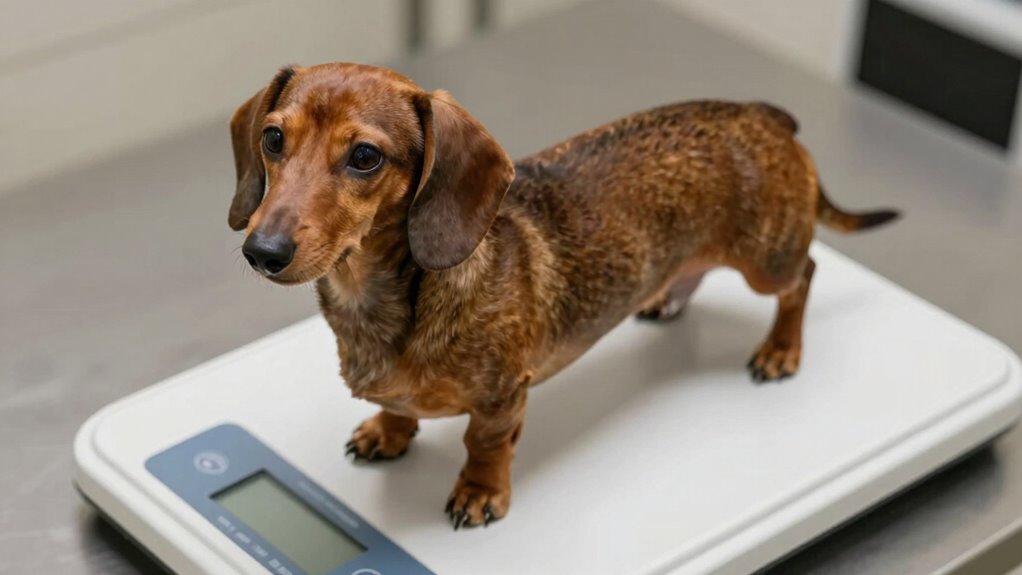
One clear sign our Mini Dachshund is at a healthy weight? We can easily feel their ribs without pressing hard—no excess fat in the way. For Miniature Dachshunds, a healthy weight usually means less than 11 pounds, with an ideal weight around 7 kg, though age and activity matter.
Another strong sign: a tucked, defined waistline just behind the ribs when we look from above. That silhouette tells us their body condition score (BCS) is on track—aiming for a 4 to 5 on the 9-point scale.
We don’t wait for obvious changes to act. Regular veterinary check-ups help us catch subtle shifts before they become problems. Maintaining a healthy weight prevents serious health issues like diabetes, joint stress, and back injuries common in our long-backed friends, which is why selecting appropriate nutrition with moderate protein and fat content is essential for their overall wellness.
When we stay consistent with assessments, nutrition, and movement, we give them better years. These signs, combined with professional insight, keep our dachshunds strong, balanced, and thriving at their ideal weight.
Common Causes of Weight Issues in Miniature Dachshunds
While genetics can predispose some Miniature Dachshunds to pack on pounds, we often see weight issues stem from everyday habits we can control.
These pups are prone to obesity, and without a good diet and daily exercise—about 50 minutes—we risk serious health problems like diabetes, arthritis, and heart disease.
Overfeeding, poor dietary habits, and high-fat treats, even in small amounts, add up fast for dogs this size. We mightn’t realize it, but portion distortion is real. Using tools like slow feeders can help with portion control and prevent overeating during mealtimes.
That’s why we rely on the Dachshund Weight Chart and body condition score (BCS), not just the scale. BCS helps us see if our dog has a healthy shape—ribs we can feel, a tucked waist, and a visible tuck-up.
Regular veterinary check-ups keep us on track, catching weight issues early. We don’t have to guess; consistent monitoring and informed choices make all the difference.
Together, we can keep our little companions lean, lively, and living their best lives—because their long-term wellness starts with what we do today.
Managing Your Mini Dachshund’s Weight Through Diet and Exercise
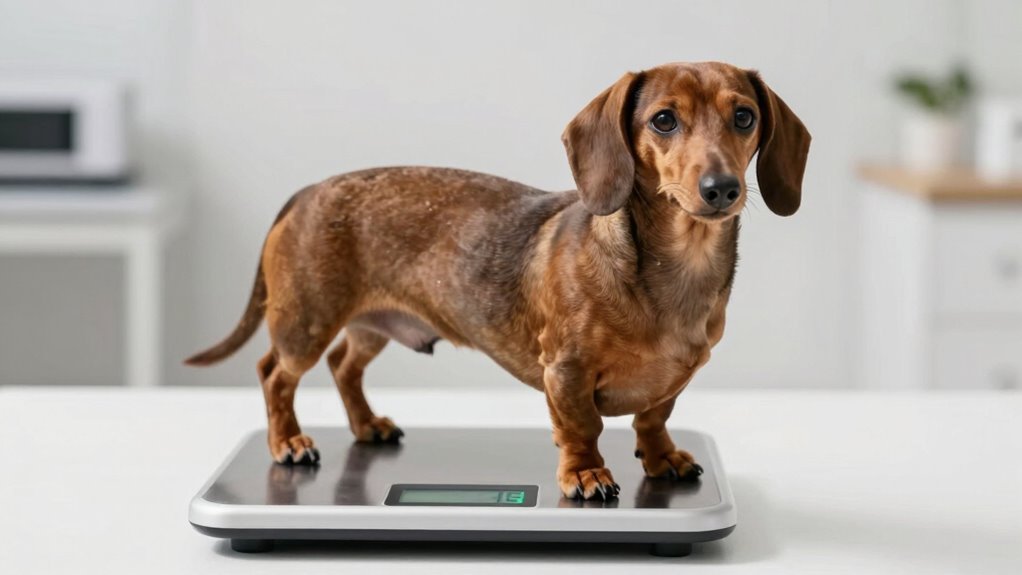
Though they’re small in stature, Miniature Dachshunds need big commitments when it comes to diet and exercise—because every ounce matters. We keep our pups in the ideal Dachshund weight range of 8–11 pounds by feeding a balanced diet that meets their precise nutritional requirements.
We choose high-quality dog food with the right protein-to-fat ratio, avoiding overfeeding or table scraps to prevent obesity. We monitor portion sizes daily and adjust based on activity levels. A healthy adult Dachshund thrives on routine, so we stick to set meal times.
Regular exercise is non-negotiable—about 50 minutes a day, split into two or three walks, keeps their spine supported and muscles strong. We track their progress not just on the scale but through monitoring body condition score: ribs should be easily felt, a waist visible from above, and an abdominal tuck from the side. Consistent grooming and maintenance of tools can also support bonding during daily brushing routines that help you observe your dog’s overall health.
Small changes add up. We stay consistent, because supporting our dog’s weight isn’t just about looks—it’s about long-term health and comfort.
When to Consult a Veterinarian About Your Dachshund’s Weight
If your Miniature Dachshund isn’t holding steady in the ideal 8–11 pound range, or you’ve noticed subtle shifts that seem off, it’s time to consult your veterinarian.
We all want our dachshunds healthy, but weight changes can quietly signal bigger issues. Sudden changes in appetite, energy dips, or ribs you can’t feel? These aren’t just quirks—they’re red flags.
Obesity in dachshunds increases spinal risks and harms long-term Dachshund health. A Body Condition Score (BCS) exam helps vets assess if your dog’s at a healthy weight, going beyond the scale. It’s more accurate than guessing by looks.
For individual dogs, even small shifts matter. We should track regular veterinary check-ups every six months—especially as they age or if lifestyles change.
If there’s unexplained weight loss or gain, we need vet guidance fast. A tailored weight management plan can correct course.
These moments aren’t alarms; they’re care cues. Prioritizing overall health means acting early, not waiting.
Let’s keep our pups strong, lean, and living their best lives—because their well-being is in our hands.
Frequently Asked Questions
How Big Is a Full Grown Mini Dachshund?
We’re curious about your full grown size, and we understand it matters to you. A mini dachshund weight typically stays under 11 pounds, with a height comparison of 5–6 inches. Our dachshund growth reaches final stages by 12 months, shaped by genetics and diet impact. We consider health considerations daily, ensuring our little one thrives. The weight range reflects careful balance—we honor breed characteristics, mindful of mini vs standard differences. We nurture growth together.
What Are the Cons of a Miniature Dachshund?
We understand you love your mini dachshund, but we’ve seen how their stubborn streak and bark can challenge us. Their mini dachshund health worries us—IVDD, common illnesses, and lifespan concerns weigh on our hearts. We worry about their exercise needs, dietary restrictions, grooming requirements, socialization issues, and behavioral traits. We manage it together.
What Are the Three Sizes of Dachshunds?
We see three sizes in the Dachshund breed: Miniature, Standard, and a rare Tweenie. We compare Miniature vs Standard for you, explain weight variations, and link size to health, personality, and lifespan so you choose the right fit lovingly.
Why Are Mini Dachshunds so Expensive?
We’ve seen how treasure hunts end with gold, and that’s us—mini dachshunds cost more ’cause breeding costs, health issues, and popularity factors stack up. We whisper secrets: coat variations, supply demand, pedigree importance, geographical differences, training challenges, age factors—each detail shapes our worth to you.
Conclusion
We’ve checked the claims, and yes—miniature dachshunds must stay under 11 pounds to thrive. At 8 to 10 months, they reach full size: 8–11 lbs is ideal, 6–8 lbs at 4 months, 8–10 lbs at 6 months. We monitor weight closely—it prevents back issues. We feed measured portions, avoid table scraps, and walk daily. It’s understood: precise weights matter. When in doubt, we call the vet. Stay vigilant, stay consistent.